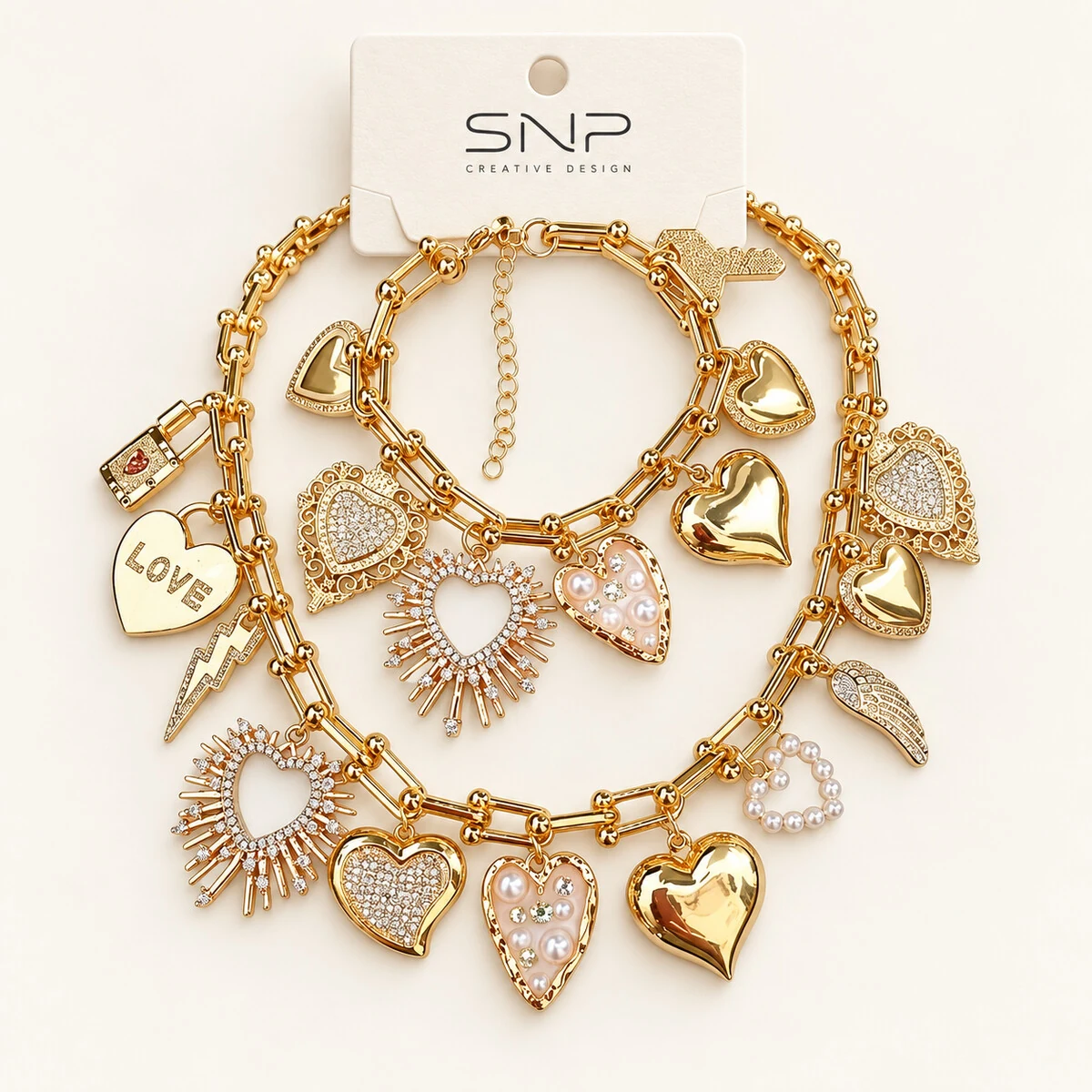
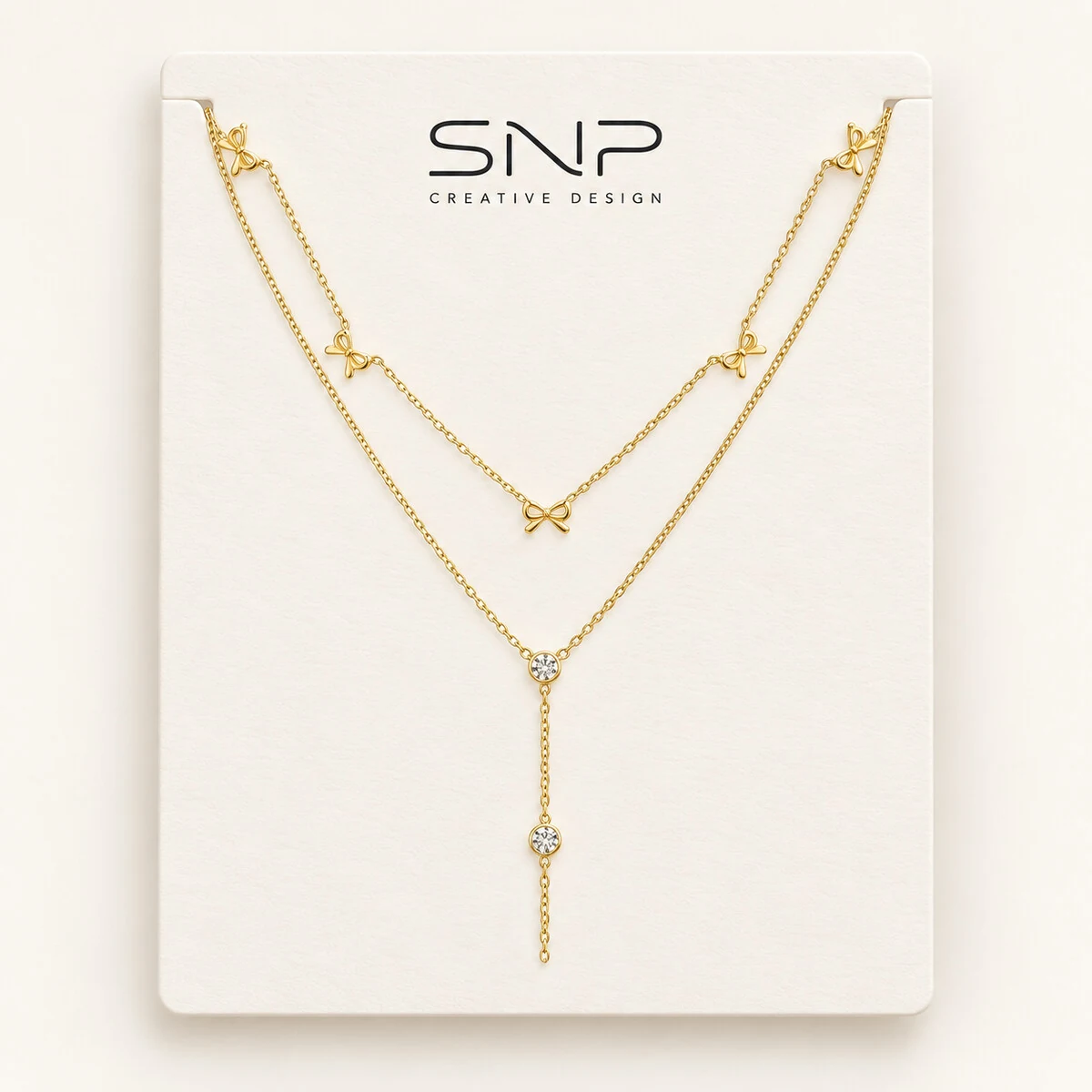
Read the chain’s structure
Cable chains use a sequence of linked loops. Curb styles use links arranged to sit flatter. Rope styles create a twisted visual effect; the exact construction varies by design. These names are useful starting points, but they do not replace a physical reference.
Suppliers may use different terms for similar profiles. Share a clear reference and confirm the actual link shape and dimensions during development. A familiar name alone is not enough to define a repeat order.
Match the profile to the design
Review the chain next to the pendant or charm, rather than choosing each independently. Consider whether the chain should be visually quiet or form part of the statement. Check that the connection allows the pendant to sit and move as intended.
Length and proportion affect the finished look. A layered necklace also needs a review of how the lengths sit together, how the chains interact and how the closure is handled. Approve the complete assembly on a suitable form or wearer reference where available.
Look at feel and movement
Handle the sample. Observe whether it drapes as intended, moves freely and presents consistently from different angles. Check for rough points, distorted links and unwanted stiffness.
Do not infer performance from visual thickness alone. Construction, material and connection details can change the behaviour of two chains that look similar in a photograph. Agree functional requirements according to the product’s use.
Finish the ends properly
The chain ends, jump rings, clasp and extender form one system. Confirm that the connections suit the chain profile and that a fine link cannot slip through an unintended gap. Operate the clasp and review its accessibility in the finished product.
Compare finish colour across all components. A visible mismatch at a clasp or extender can undermine an otherwise coherent piece. Refer to the approved complete sample when checking production.
Think about the retail handover
Fine and layered chains need a considered packing presentation. Review whether the item arrives in a state that can be displayed easily, with reasonable protection against tangling and surface damage.
Bring the intended packaging into sampling rather than treating it as an afterthought. At SNP, chain choice is part of the wider discussion about silhouette, material, assembly, finish and commercial position.
The buyer’s takeaway
Specify the chain with a physical reference, then approve its drape, connection, finish and packing as part of the complete piece.
Links support terminology and general material background. SNP’s product-development commentary is an editorial interpretation.